Sunday, April 17, 2011

Troy

Our visit to Troy was truly wonderful for me as my nerdy love for city planning was able to come to good use for a few hours.  As Mr. G had said the day before "There isn't much to see at Troy."  We all gave him a hard time after, as we spent almost 2 hours there when he only planned for us to be there for one.  We found it way more interesting than he did!

First, we visited the remade famous Trojan Horse.  As the legend states, the Greeks constructed a huge wooden horse that was able to fit 30 men and they left.  The men who were in the horse snuck out late at night and allowed the Greeks back in in order to enter the city of Troy and destroy it and thus end the Trojan War.  While, its not certain this ever happened - there is no physical evidence of it - they did reconstruct it and you can go in it!


After our little touristy moment, we walked through the city for a couple of hours which was just fascinating.  There are several layers to the city and some of the oldest parts of the city are over 5,000 years old!  While walking through you can imagine what life may have been like for the people of Troy. We even found some small pieces of pottery that may have been used to store food and water.  It was pretty nice just to walk through the ruins and imagine what it was like at all its different stages.  Troy is written about as a coastal city (Which you can see in this map).  As the earth has risen/the sea has receded, the sea is now 3 kilometers away.


Notice the different stones and building patterns of these walls built at different times.
The wall on the left is from the first Troy (5000 years ago)


You can see the Roman Numerals indicate which time frame these
parts of the city are from

A well

Early accessibility...very cool!

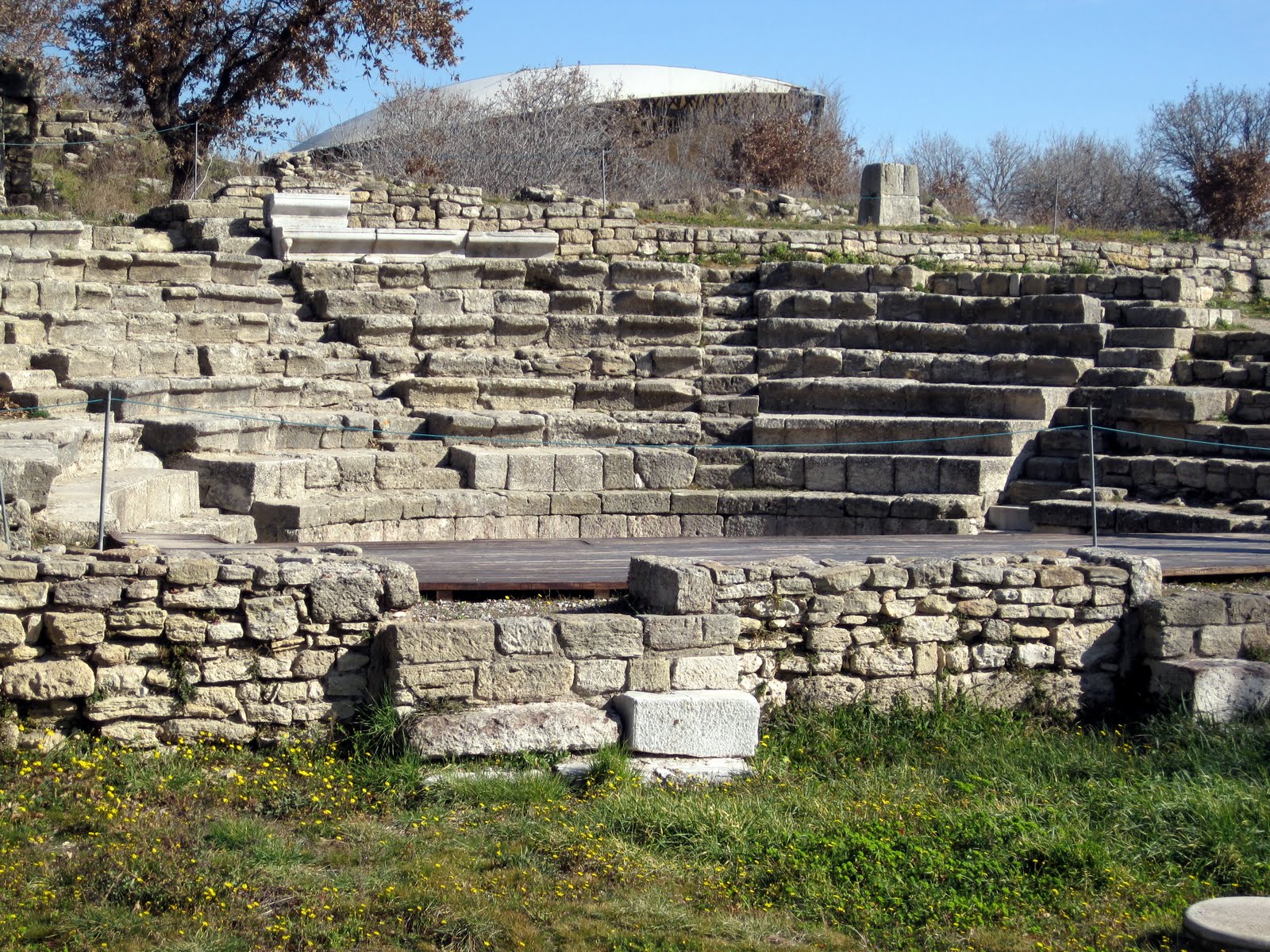
Amphitheater


Some of the best food I had in Turkey!  And it was
from a gas station!  Not like the US!
These are lamb meatballs...so good!

Where the awesome food was from

And a camel at the gas station - of course!

Saturday, April 16, 2011

Gallipoli

So, we started out from Turkey early - 6:15 AM - on our way down to the Gallipoli Peninsula. While we booked the tour originally to see Troy, I am now so grateful we were able to see this important and beautiful area. We were on the tour with two couples both from Australia and our guide and driver. It was nice to be on a smaller tour and we seemed to get to the sights just before a big bus of people came in. We drove about 5 hours, with a 30 minute break for Turkish coffee, down the route shown here (though we were mostly by the sea rather than this exact route):


View Larger Map

This is the site where the ANZAC forces were supposed to land, but due to a current,
they landed upcoast at a very difficult place to pass.  What would have happened
had they made it to the right spot?
The ANZAC cove where the forces actually landed.  Not very welcoming.


Ataturk
As we drove, we watched the movie Gallipoli where a VERY young Mel Gibson goes to fight in WWI on the Gallipoli peninusula.  In 1915, the British launched this attach in an effort to overtake Constantinople (now Istanbul), however after 8 months of fighting, over 10,000 ANZAC (Australia New Zealand Army Corps) and over 80,000 Turkish soldiers and civilians died, Turkey won the battle.  The Turkish general Ataturk who lead the fight against the invasion was credited with winning the battle and thus maintaining Turkey as an independent country. Therefore, the country was named Turkey.

While this battle is clearly significant for Turkey, it is also very significant for the people of Australia and New Zealand.  ANZAC day - April 25 - is celebrated annually with thousands of Aussies and Kiwis making a pilgrimmage to the ANZAC cove where so many soldiers lost their lives.  As one of our fellow travelers explained, this battle and the ANZAC forces involvement was so significant as it is what helped bring these two newly formed countries together to fight and unify towards a common goal.  As the movie Gallipoli illustrated, fighting in the war was marketed as a wonderful adventure, so many young men readily volunteered to go fight for their country not knowing what they were really getting into.
ANZAC cove
 It was amazing to see the beautiful memorials that were built for essentially the "invaders" of Turkey and how much respect the Turkish people have for the Aussies and Kiwis.  It was a true sign of the generosity and genuine kindness we saw in all the people we met in Turkey.

One of the cemetaries


Lone Pine memorial

View out along the coast from Lone Pine

Walking through the trenches with Mr. G (our guide)
 As we walked through these hallowed sites and Mr. G explained to us which directions the troops came from and how they came to fight at the top of this massive hill in these trenches, you could almost feel the presence of the thousands of men who died here.  It is impossible to describe the awe and expansiveness of this battleground.  Even the pictures do not do it justice.
Trenches
 After our afternoon tour of the peninsula, we took a ferry that we just barely made (that was one fun ride), to Çanakkale, which is on the Asian side of the country, where we stayed for the night.

Turkish flag on the boat to Çanakkale


Çanakkale - Asian side


View from our hotel

Smoking apple nargile (hookah) - apple
flavored tobacco

Fellow travelers and our driver and guide

Great ashtray in our hotel!
Don't smoke!  But if you do, put it out here...

Istanbul's Spice Market and Yeni Mosque


The Mısır Çarşısı or Egyptian Bazaar or Spice Market was one of my favourite places in Istanbul.  Its just opposite the Galata Bridge where fishermen spend their days collecting their catch and tourists enjoy walking to Asia and enjoying one of many beautiful views of Istanbul.


We visited the Spice Market each day we were in Istanbul to buy figs, apricots, cheese, bread, pistachios, and turkish delight to eat for our meals.  We met some great people there who loved seeing us each day.


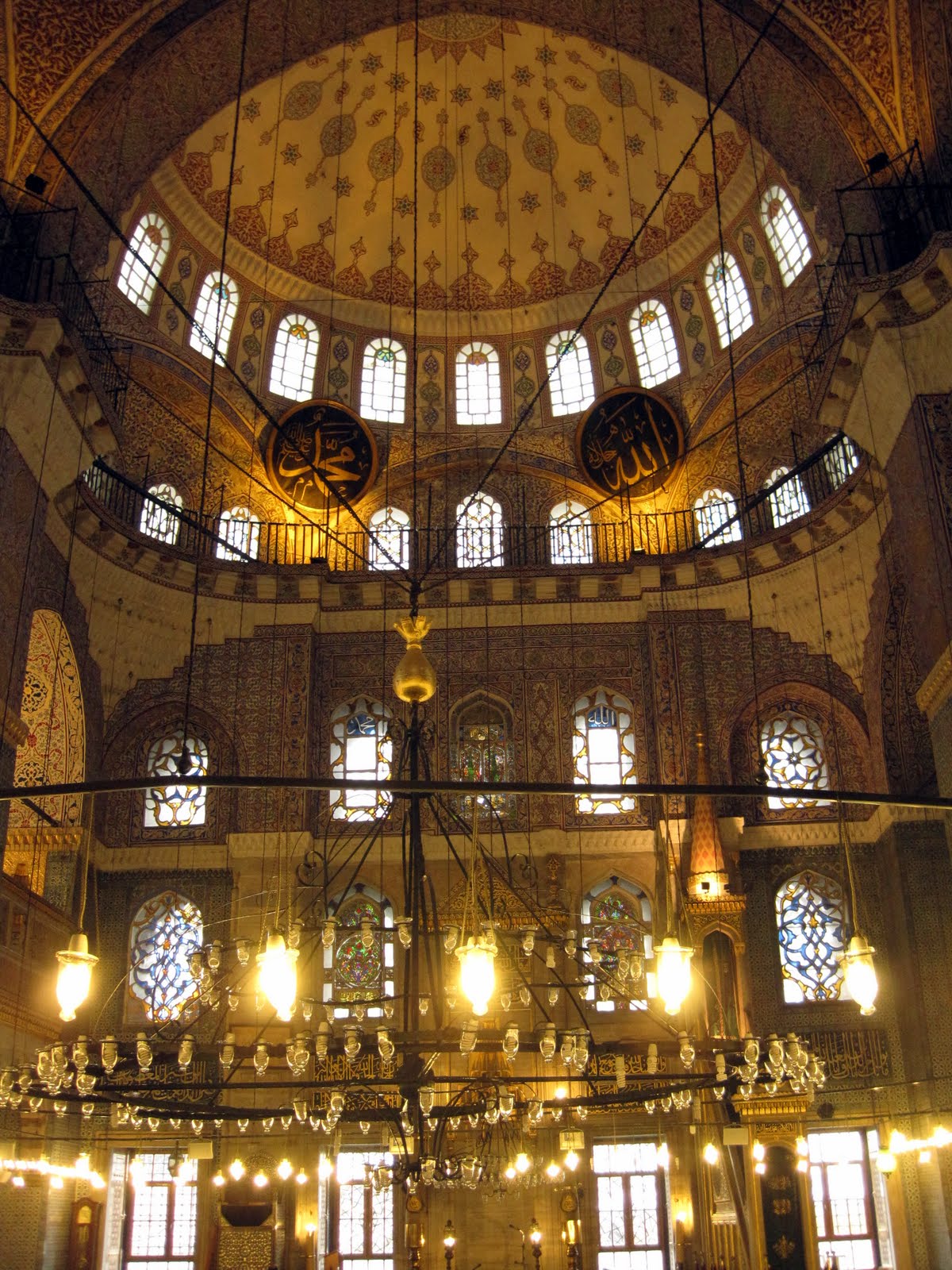
The Yeni Mosque (New Mosque)


Saturday, April 9, 2011

Hagia Sophia

The Hagia Sophia means "Holy Wisdom" in Latin.  From the time it was constructed in 360 A.D. to 1453, the Hagia Sophia served as the cathedral of Constantinople.  Then it became a mosque until 1931 when it was secularized and changed into a museum as it has been since.  (Source: Wikipedia)

Until 1520, the Hagia Sophia was the largest cathedral in the world, and stepping into the space, one can feel the grandeur of this incredible building.  The vast open space is filled with the sounds of cameras clicking, visitors whispering, and birds flying and chirping.  There was a sense of calm walking through this space.  The worn footpaths made me wonder, over the past 1700 years, who all has walked through this space?  What were they thinking and feeling when they were here?

I cannot say enough how calming being in the building was.  I generally feel a sense of calm when walking through religious spaces, however this was different for me.  Perhaps it was the sense of peace that came from knowing that within these walls there was a sense of understanding that seems lacking in our world.  To see the symbols of both the Islamic and Christian faiths literally side by side and one a top the other - well that's a level of respect and understanding so uncommon in our daily lives.  Everywhere you look, there's news of another war or conflict or dispute.  And really, what is everyone fighting about?  It often comes back to some deep seeded philosophy that this group is bad because of XYZ.  But do we really know why?  Sometimes I wonder if we just lived our lives and let go of these past angers, if we might all be happier.


Well, if you want to know more about the history of the Hagia Sophia, its out there for you to find.  As most of you know, I'm generally more interested in impressions, feelings, and experiences than the facts and figures.  So, that's what you'll get here.  :)  I really think the pictures speak for themselves...I hope they give you a glimpse of the powerful experience it was to be in this amazing space.